The Kaaba Origin to 1626 Renovation
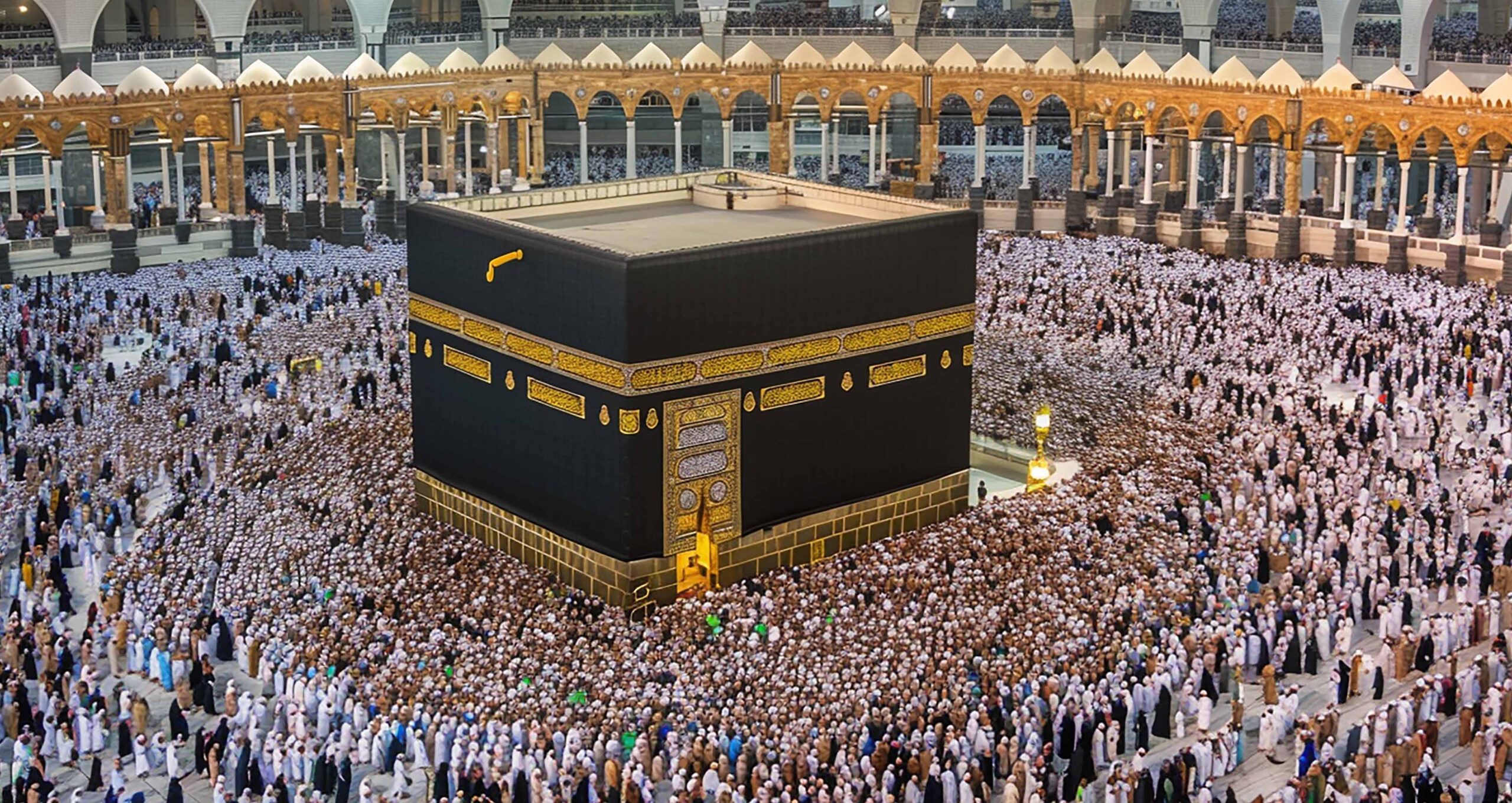
The Kaaba, or al-Kaaba al-Musharrafah (The Noble Kaaba), stands as the undisputed focal point of Masjid al-Haram in Mecca, Saudi Arabia, revered globally as Islam’s holiest shrine. Draped in its magnificent covering, the Kiswa—a veil of cotton and silk, now famously black with gilded calligraphy—this cube-shaped structure holds immense religious significance for Muslims worldwide, serving as the ultimate destination for pilgrims undertaking the sacred journeys of Hajj and Umrah. Its history, rooted in pre-Islamic Arabia, is a profound narrative of prophecy, devotion, and continuous renewal.
The Prophetic Origins: Ibrahim and the Black Stone
The Kaaba’s spiritual cornerstone is laid in the Qur’an, which attests that it was constructed by the prophet Ibrahim (Abraham) and his son Ismail (Ishmael) under the guidance of Allah. This act established it as the initial place of worship for humanity (Bayt Allāh – The House of God).
Tradition holds that during its construction, the angel Jibreel (Gabriel) presented Ibrahim with the Black Stone (al-Hajar al-Aswad), which was placed in the Kaaba’s eastern corner. This sacred relic is believed to be one of the few original remnants from Ibrahim’s era, a testament to the Kaaba’s antiquity, enduring multiple reconstructions over the centuries for necessary maintenance. The Black Stone’s presence also dictates the starting point for the tawaf (circumambulation) ritual during pilgrimage.
Following its construction, Allah directed Ismail’s descendants to observe the yearly Hajj pilgrimage. Crucially, the vicinity of the shrine was also designated as a Haram—a sanctuary where violence and bloodshed were strictly prohibited, establishing Mecca’s ancient role as a city of peace.
Before the Prophet’s Era: Mecca’s Trading Hub
Before the advent of Islam, Mecca was a bustling and strategically located trade hub on the caravan routes. The Kaaba held significance for various Bedouin tribes and settled communities across the Arabian Peninsula.
The Era of Idols
While the Kaaba retained its historical association with Ibrahim, it gradually became a pantheon for the deities of the region’s diverse tribes. Pilgrimages to Mecca were customary, where worshippers paid homage to their specific gods housed within or around the Kaaba. Key idols included Hubal, the primary deity of the ruling Quraysh tribe, and others like al-Lāt, al-‘Uzzá, and Manāt.
Initially, the Kaaba was a modest, roofless structure in a simple rectangular or rounded form. By 608 CE, the powerful Quraysh tribe, who governed pre-Islamic Mecca and controlled access to the Kaaba, undertook a significant reconstruction. They used wood and masonry blocks but, due to a lack of resources, they were unable to restore the original dimensions and left a section—the area now known as. The Hatīm (or Hijr Ismail)—outside the main wall, giving the structure a slightly truncated appearance compared to its earlier form.
During Prophet Muhammad’s Era: Reconsecration and Conflict
The early years of Islam saw the Kaaba returned to its original monotheistic purpose.
Cleansing the House of God
Following the Prophet’s return to Mecca in 630 CE, the Kaaba was reconsecrated as the shrine of Allah alone. All the idols housed within and surrounding the structure were removed and destroyed, definitively ending the era of polytheistic worship in the sanctuary and firmly establishing. The Kaaba as the direction of prayer (Qibla) for the burgeoning Muslim community.
The Path to Pilgrimage
The transition was not immediate or easy. In 628 CE, the Prophet and his followers were initially denied entry to Mecca to perform the pilgrimage. This led to the Treaty of Hudaybiyyah, a pivotal peace agreement that, among other stipulations, secured permission for Muslims to perform the pilgrimage from the following year. This event marked a major turning point, recognizing the Muslim community’s right to the Kaaba.
Post-Prophet Muhammad: Sieges and Reconstructions (683-692 CE)
Following Prophet Muhammad’s demise, the Kaaba became tragically involved in the political turbulence of the early Caliphates.
The Damage and Restoration by Ibn al-Zubayr
The Kaaba suffered severe damage from fire in 683 CE during the First Siege of Mecca by the Umayyad army against Abdullah ibn al-Zubayr, who was the rival Caliph based in Mecca. Ibn al-Zubayr then boldly reconstructed the Kaaba on the foundations he believed were laid by Ibrahim, thus incorporating. The Hatīm back into the main structure and giving it a rectangular shape closer to its original dimensions. Significantly, his design also included two doors, as was believed to be the case in Ibrahim’s structure.
The Umayyad Reconstruction
The Kaaba was again bombarded and severely damaged during the Second Siege of Mecca in 692 CE. After Ibn al-Zubayr was defeated, the Umayyad Caliph Abd al-Malik ibn Marwān rebuilt the structure. Rejecting Ibn al-Zubayr’s design, Abd al-Malik reverted the structure to the cubical form established by the Quraysh in 608 CE, leaving the Hatīm separate again and retaining only one door. This is the basic external design that largely persists today.
Late History: The 1626 Flood Renovation
For centuries after the Umayyad reconstruction, the Kaaba’s structure remained relatively stable, undergoing maintenance and minor repairs. However, in 1626 CE, a major natural disaster struck Mecca.
Heavy seasonal flooding caused the collapse of the Kaaba’s walls. Under the patronage of the Ottoman Sultan Murad IV, the structure was immediately and thoroughly reconstructed using durable granite stones from Mecca. This extensive rebuilding effort solidified the structure, and since this 1626 renovation. Its basic external appearance has remained essentially unchanged, ensuring its enduring form for the next four centuries.
Additional Facts: Evolution of the Sacred Structure
The Kaaba’s history is full of fascinating details that underscore its profound significance to Muslims:
- Doors and Windows: Originally, the Kaaba had two doors (one for entry, one for exit) and a window. The 692 CE reconstruction standardized the current single door and eliminated the window.
- The Kiswa’s Hue: The covering of the Kaaba, the Kiswa, has historically been multicolored (white, red, green, and striped). It gradually transitioned to its renowned black hue during the Abbasid era, a color that is now symbolically associated with solemnity and dignity.
- Public Access: Initially, the Kaaba was open to the public for prayer. However, access became restricted over time, particularly with the surge in pilgrims, and is now generally reserved for Muslim dignitaries, royalty, and specialized cleaners.
- Internal Prayer: The significance of the Kaaba is in its external function as the Qibla. Therefore, prayer direction inside the Kaaba is flexible, allowing worshippers to pray in any direction—a symbolic freedom reinforcing that Allah is not confined to one structure.

Recent Posts
HAJJ – A Journey of Submission
14 Duas for Safe Travelling and a Successful Journey
Umrah Rules: Male vs Female Pilgrims
ZamZam Water: History, Benefits & Miracle